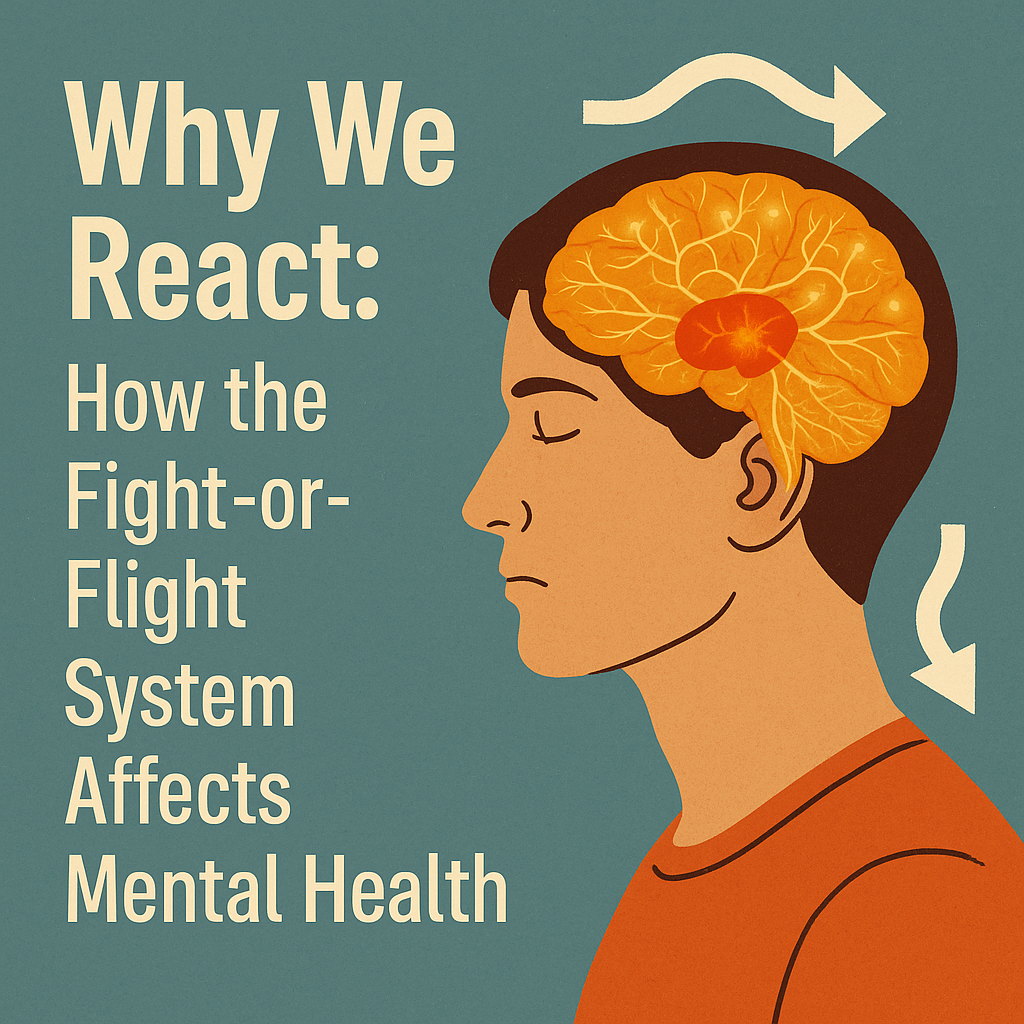

We all have moments when our heart races, palms sweat, or our mind suddenly blanks out. It’s not a weakness; it’s your brain reacting through a survival system called fight or flight. In this post, we explore the connection between fight or flight and mental health, showing how this ancient response helps explain anxiety, burnout, and more. Understanding it is the first step to reducing fear and stigma around mental illness.
? The Brain’s Built‑In Alarm System
When we sense any physical or emotional stressor, the fight‑or‑flight response swings into action. The fight‑or‑flight response is the body’s survival mechanism, first described in 1915. It begins in the amygdala, which signals the hypothalamus and triggers the sympathetic nervous system, releasing adrenaline and noradrenaline from the adrenal medulla (Northwestern Medicine, 2022; Jemielita & Love, 2023). These chemicals prepare our bodies to act, raising heart rate, redirecting blood to muscles, and sharpening senses.
In short bursts, it’s lifesaving. But when stress becomes unrelenting, this system shifts from helper to hindrance.
? When Protective Becomes Problematic
Chronic activation of the fight‑or‑flight response can compromise both body and mind:
- Brain structure changes: Chronic stress shrinks the prefrontal cortex (decision‑making and self‑regulation) and hippocampus (memory), while amygdala circuits become more reactive (“Fight-or-Flight Response,” 2024).
- Mood and anxiety effects: Long‑term stress disrupts neurotransmitters, cortisol, dopamine, and serotonin, increasing the risk for anxiety, depression, and addictive behaviors (Harvard Health Publishing, 2018).
- Physical health toll: High cortisol harms the immune system, raises blood pressure, disrupts sleep, and weakens digestion (MentalHealth.com, n.d.).
Even Harvard Health warns: chronic stress can lead to mental health disorders over time (Harvard Health Publishing, 2018).
? How This Links to Everyday Anxiety
Anxiety is essentially fight‑or‑flight triggered by imagined threats, not just real ones. The amygdala sparks fear, but the brain remains “on” even without immediate danger. As Harvard notes, repeated alarms reshape brain chemistry, heightening reactivity and lowering resilience.
Over time, our natural parasympathetic “off‑switch” weakens, keeping us stuck in alarm mode. That imbalance fuels anxiety, digestive issues, poor sleep, and burnout.
? What Science Teaches Us to Heal
Understanding the fight‑or‑flight chain helps us intervene:
- Activate the calm – slowing breathing and practicing mindfulness helps engage the parasympathetic system, lowering cortisol and heart rate (Northwestern Medicine, 2022).
- Strengthen your prefrontal cortex – therapy, problem solving, and new learning re‑engage brain circuits that regulate emotion.
- Support body and mind – good sleep, balanced nutrition, exercise, and social connection provide brain support and reduce inflammation.
- Practice regularly – consistency is key: just like muscles, emotion‑regulation skills strengthen through repeated use.
? Reframing: Not Weak, Just Wired
Stigma often labels reactive responses as “overreacting” or “weak.” But when we see mental health through a brain‑based lens, we understand that anxiety and stress responses follow known biological patterns.
This reframing is powerful:
- It reduces self‑blame – you’re not “falling short,” your brain is doing what it was built to do.
- It opens doors to change – because your brain is adaptable, and you can rewire its responses.
✅ Final Takeaways
| Insight | What It Means |
|---|---|
| The fight‑or‑flight response is natural, but not meant for constant activation | Stress isn’t you failing, it’s your brain signaling danger |
| Chronic stress reshapes brain structure and function | You’re not going crazy, you’re stressed |
| You can help rebalance your brain | Learning, rest, therapy, and breathing can rebuild resilience |
Conclusion:
At Nurse Dave’s Corner, we honor the science that our brains are dynamic systems capable of both distress and growth. Understanding the fight‑or‑flight system helps us shed stigma and empowers real change. Healing begins when we learn how our brains are wired and how we can rewire them for well‑being.
References
Harvard Health Publishing. (2018, July 6). Understanding the stress response. Harvard Health. https://www.health.harvard.edu/staying-healthy/understanding-the-stress-response
Jemielita, B., & Love, L. (2023). Physiology, stress reaction. In StatPearls. StatPearls Publishing. https://www.ncbi.nlm.nih.gov/books/NBK541120/
MentalHealth.com. (n.d.). The long-term consequences of negative stress. https://www.mentalhealth.com/library/long-term-consequences-of-negative-stress
Northwestern Medicine. (2022). The science of anxiety. https://www.nm.org/healthbeat/healthy-tips/emotional-health/the-science-of-anxiety
Self. (2020, February 24). Step aside, fight-or-flight. ‘Tend and befriend’ is here to help. https://www.self.com/story/tend-and-befriend-response
Verywell Mind. (2023, October 9). How the parasympathetic nervous system influences your mental health. https://www.verywellmind.com/how-the-parasympathetic-nervous-system-influences-your-mental-health-11722960
Wikipedia contributors. (2024, May 17). Fight-or-flight response. Wikipedia. https://en.wikipedia.org/wiki/Fight-