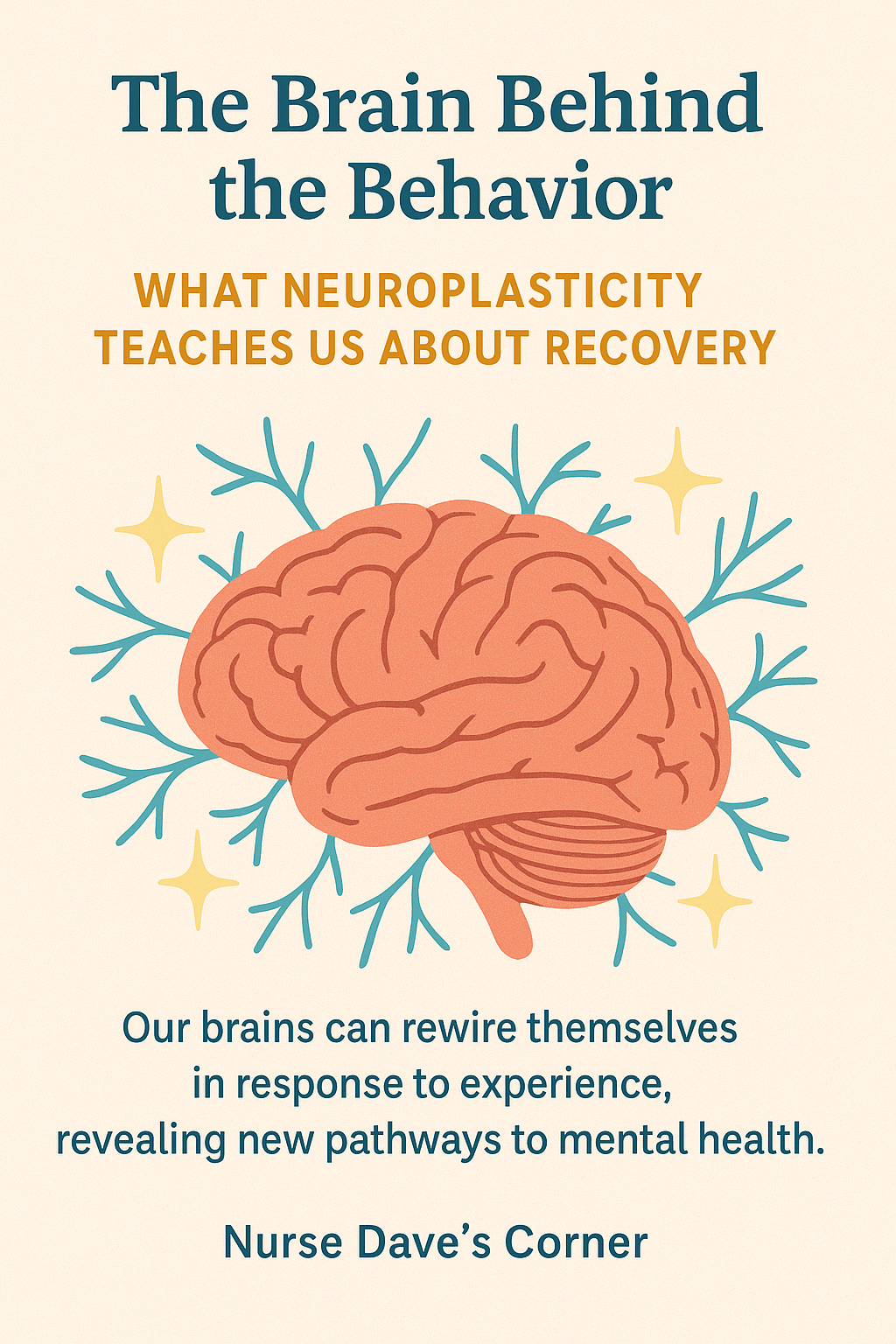

Mental health recovery isn’t just about time or willpower; it’s also about how the brain itself adapts. Thanks to neuroplasticity, the brain can form new connections, strengthen healthy pathways, and adjust in ways that support healing. In this post, we’ll explore neuroplasticity and mental health recovery, uncovering how science is helping replace stigma with a deeper understanding of what’s possible. Whether you’re on your own recovery journey, supporting someone you care about, or simply curious about the brain’s role in healing, this is where hope meets hard evidence.
What Is Neuroplasticity and Why Does It Matter in Mental Health Recovery
Neuroplasticity is the brain’s built-in ability to rewire itself in response to learning, experience, and even injury. It allows us to adapt, grow, and recover even from challenges that affect our mental health.
For decades, experts believed the brain’s wiring was mostly fixed by adulthood. Now, research has shown that new neural pathways can form at any age, which means recovery is not just possible, it’s measurable. This understanding has reshaped treatment approaches for depression, anxiety, PTSD, and other mental health conditions, making neuroplasticity and mental health recovery a shared goal for clinicians and patients alike.
The Brain’s Hidden Talent: Change
For a long time, scientists believed that once the brain matured, its wiring was fixed for life. Now we know that isn’t true. Neuroplasticity, the brain’s ability to reorganize itself, means our brains remain adaptable well into adulthood. This adaptability is key in mental health recovery because it allows us to learn new skills, form healthier habits, and even counteract the effects of past stress or trauma. The changes may be gradual, but they’re real and measurable, offering a powerful reminder that recovery is more than just coping; it’s rewiring.
How Neuroplasticity Supports Mental Health Recovery After Trauma
Trauma leaves its mark on the brain, often strengthening fear pathways and weakening those related to safety and calm. Neuroplasticity allows the brain to rebalance, creating new connections that promote emotional regulation and resilience.
Studies using brain imaging have shown that targeted therapy, mindfulness, and skill-building can physically change brain structures involved in mood, memory, and stress responses. These findings make neuroplasticity and mental health recovery not just hopeful concepts but scientifically supported realities.
Everyday Ways to Boost Neuroplasticity for Better Mental Health
Lifestyle Choices That Encourage Brain Rewiring
- Regular physical activity – Exercise stimulates growth factors that help form new brain connections.
- Healthy nutrition – Nutrients like omega-3 fatty acids and antioxidants support optimal brain health.
- Adequate sleep – Sleep consolidates learning and strengthens neural pathways.
Therapies That Enhance Neuroplasticity and Mental Health Recovery
- Cognitive Behavioral Therapy (CBT) – Helps replace unhelpful thought patterns with healthier ones.
- Mindfulness and meditation – Strengthen brain regions linked to attention and emotion regulation.
- Occupational and creative therapies – Engage different parts of the brain through skill development.
These strategies show that neuroplasticity and mental health recovery can be influenced by daily choices as much as by formal treatment.
Reducing Stigma Through Science
When people understand that the brain can change, recovery stops feeling like wishful thinking and starts feeling like a practical, achievable process. Sharing the science of neuroplasticity and mental health recovery helps replace harmful myths like the idea that “people can’t change” with hope grounded in research.
Final Thoughts
Understanding neuroplasticity and mental health recovery shifts the conversation from “managing symptoms” to truly reshaping the brain for better well-being. Science shows that our brains are adaptable, capable of change, and responsive to care. When we share this knowledge, we reduce stigma, replace myths with facts, and offer hope grounded in neuroscience.
References
Harvard Health Publishing. (2021, August 1). Neuroplasticity: How experience changes the brain. Harvard Medical School. https://www.health.harvard.edu/mind-and-mood/neuroplasticity-how-experience-changes-the-brain
National Institute of Neurological Disorders and Stroke. (n.d.). Brain basics: Neuroplasticity. U.S. Department of Health and Human Services, National Institutes of Health. https://www.ninds.nih.gov/health-information/public-education/brain-basics/brain-plasticity
U.S. Department of Veterans Affairs. (2024, January 12). Understanding PTSD and the brain. National Center for PTSD. https://www.ptsd.va.gov/understand/what/brain_ptsd.asp
Clay, R. A. (2012, June). The neuroscience of psychotherapy. Monitor on Psychology, 43(6). American Psychological Association. https://www.apa.org/monitor/2012/06/neuroplasticity
Johns Hopkins Medicine. (n.d.). How exercise helps your brain. https://www.hopkinsmedicine.org/health/wellness-and-prevention/how-exercise-helps-your-brain